

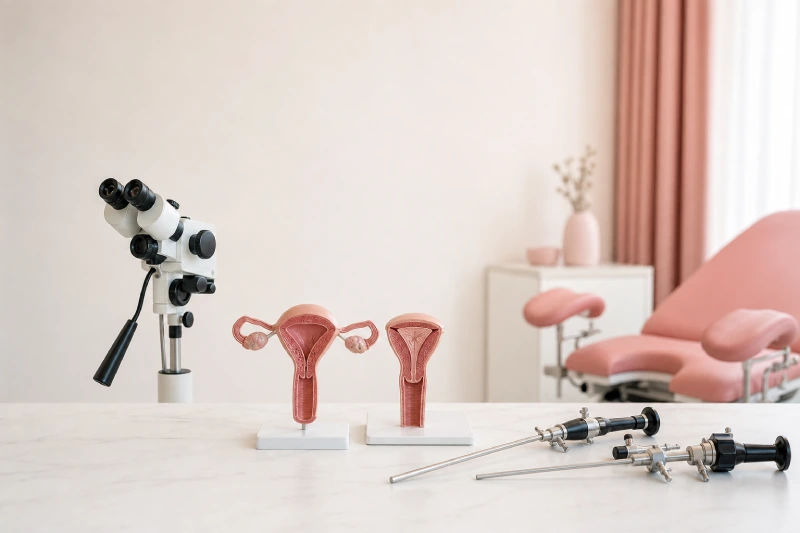
When it comes to women’s health, understanding the procedures involved in diagnosing and treating gynaecological conditions is crucial. Two important procedures often discussed are colposcopy vs hysteroscopy. In this article, we will explore the differences between these procedures, helping you understand what each entails and when they might be recommended. Knowing the distinctions between colposcopy and hysteroscopy can empower you to make informed decisions about your health.
Mr Saurabh Phadnis is a gynaecologist and oncologist based in London, specialising in women’s health issues, including colposcopy and hysteroscopy. With a focus on providing comprehensive care, he is dedicated to ensuring that patients are informed about their treatment options and can make educated decisions regarding their health.
A colposcopy is a diagnostic procedure that allows a gynaecologist to closely examine the cervix, vagina, and vulva for signs of disease. It is often performed after an abnormal cervical smear test result. During the procedure, a specialised instrument called a colposcope is used to magnify the view of these areas, enabling the clinician to identify any abnormal cells or lesions. As of 2026, approximately 3% of women will receive an abnormal cervical screening result, leading to the recommendation of a colposcopy.
Colposcopy is typically recommended in the following situations:
The procedure is usually performed in an outpatient setting and lasts about 10 to 20 minutes. Here’s what you can expect:
After a colposcopy, most women can return to their normal activities immediately. However, it is advisable to avoid sexual intercourse, tampons, and douching for a few days following the procedure to allow the cervix to heal. You may experience mild cramping or spotting, which is normal. According to NHS guidelines, recovery is usually straightforward, with most women experiencing minimal discomfort (NHS).
Hysteroscopy is another diagnostic procedure, but it is used to examine the interior of the uterus. This procedure can help identify issues such as fibroids, polyps, or other abnormalities that may be causing symptoms like heavy menstrual bleeding or infertility. A hysteroscope—a thin, lighted tube—is inserted through the vagina and cervix into the uterus. According to recent studies, around 30% of women undergoing hysteroscopy report significant improvement in their symptoms post-procedure.
Hysteroscopy may be recommended for various reasons, including:
Hysteroscopy can be performed in a hospital or outpatient setting and typically takes about 30 minutes. The procedure involves the following steps:
Recovery from a hysteroscopy can vary depending on whether it was a diagnostic or operative procedure. You may experience mild cramping and spotting, similar to a menstrual period. It is generally recommended to avoid sexual intercourse and heavy exercise for a few days post-procedure. Your clinician will provide specific aftercare instructions to ensure optimal recovery.
While both colposcopy and hysteroscopy are vital procedures in women’s healthcare, they serve different purposes and are used in different contexts:
Colposcopy is generally not painful, but you may experience some discomfort, especially if a biopsy is taken. Many women describe it as similar to menstrual cramping. According to the National Health Service (NHS), the procedure should not cause significant pain (NHS).
Results from a colposcopy biopsy may take a few days to a couple of weeks, depending on the laboratory’s workload. Your clinician will discuss the timelines with you during your appointment.
If you receive sedation for your hysteroscopy, it is advisable to arrange for someone to drive you home. If it is performed without sedation, you should be able to drive yourself, but it’s wise to check with your clinician.
Both procedures are generally safe, but like any medical procedure, they carry some risks. Potential complications include infection, bleeding, or damage to surrounding organs. Your clinician will discuss these risks with you before the procedure.
Understanding the differences between colposcopy vs hysteroscopy is essential for making informed decisions about your gynaecological health. Both procedures play a crucial role in diagnosing and treating various conditions, and knowing what to expect can help alleviate any concerns you may have. If you have further questions or would like to discuss these procedures in more detail, please contact Mr Saurabh Phadnis | Gynaecologist & Oncologist London to book a consultation.
For related information, visit our page on Gynaecological Treatments.