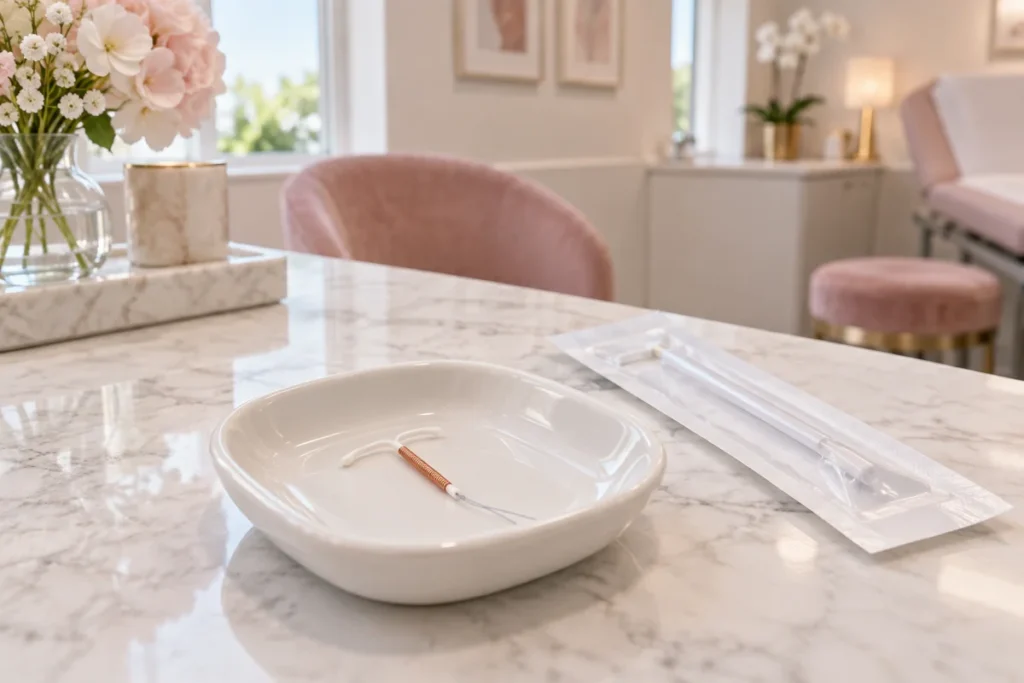
The coil contraception is one of the most reliable long-acting reversible contraceptive options available in the UK, offering more than 99% protection against pregnancy without the need to remember a daily pill. This guide, prepared by London Consultant Gynaecologist Mr Saurabh Phadnis, explains what a coil is, how it works, who it may suit, the benefits patients often notice, and the risks and side effects worth understanding before making a decision. Whether you are considering a copper coil or a hormonal coil, the aim here is to help you weigh up the facts calmly and ask better questions at your appointment.
Mr Saurabh Phadnis (MBBS, MRCOG) is a Consultant Gynaecologist and Gynaecological Oncology Surgeon practising in London, with subspecialty expertise in gynaecological cancers, colposcopy and minimally invasive gynaecological surgery. Alongside cancer care, his practice covers everyday women’s health concerns including heavy menstrual bleeding, pelvic pain, fibroids and the coil contraception and other contraceptive advice, with clinics across central London.
“Coil” is the everyday word for a small T-shaped device placed inside the womb (uterus) to prevent pregnancy. It sits within the uterine cavity, with two fine threads passing through the cervix into the upper vagina so the device can be checked and later removed. There are two broad types of the coil contraception used in the UK, and they work in different ways.
The copper coil contains no hormones. The copper alters the environment inside the womb and fallopian tubes so that sperm cannot survive or fertilise an egg, and it also makes implantation unlikely. Depending on the exact device, a copper coil may be licensed for use for between five and ten years. It works as soon as it is fitted, which is why the copper version can also be used as emergency contraception in certain situations, as explained in the NHS guidance on the IUD.
The hormonal coil releases a small, steady amount of a progestogen (levonorgestrel) directly into the womb lining. This thins the lining, thickens cervical mucus and, in some users, stops ovulation. Because the hormone acts mainly locally, the circulating dose is low. Hormonal coils are licensed for different durations depending on the brand, generally between three and eight years for contraception, and your clinician will confirm which applies to your device.
The coil contraception is classed as a long-acting reversible contraceptive (LARC). The Faculty of Sexual and Reproductive Healthcare and NICE both highlight LARC methods as highly effective precisely because they do not depend on daily or monthly user action. Reported benefits include:
There is also a therapeutic side to the coil contraception that many patients are unaware of. The hormonal coil is recommended by NICE as a first-line treatment option for heavy menstrual bleeding, and it is widely used to protect the womb lining in women taking oestrogen as part of hormone replacement therapy, and to help manage pain associated with conditions such as endometriosis and adenomyosis. If your periods are heavy or painful, it is worth exploring the gynaecological conditions that may be contributing, because contraception and symptom control can sometimes be addressed with the same device.
No contraceptive method is entirely without drawbacks, and an honest discussion of risk is part of informed consent. Most people who use the coil contraception have no serious problems, but the following are recognised and should be weighed up before fitting.
You should seek medical advice if you develop persistent lower abdominal pain, unusual or offensive vaginal discharge, fever, pain during sex, unexpected heavy bleeding, or if you cannot feel the threads or think the device has come out. The Royal College of Obstetricians and Gynaecologists publishes patient information on gynaecological procedures that many women find helpful when preparing for a discussion about these symptoms.
Fitting is an outpatient procedure that usually takes around five to ten minutes, with the appointment itself lasting longer to allow for counselling, examination and observation afterwards.
Experience of pain varies widely. Some women describe strong period-type cramps for a minute or two, others find it mild. Options such as taking simple pain relief beforehand or using local anaesthetic can be discussed, and current UK guidance from the Faculty of Sexual and Reproductive Healthcare emphasises that pain should be openly discussed and never dismissed. In a small number of cases, particularly where the cervix is narrow, previous attempts have failed, or fibroids distort the cavity, fitting under sedation or general anaesthetic in a theatre setting may be recommended. Procedures of this kind can be arranged in private hospital settings such as The London Clinic.
The coil contraception may be appropriate for women who want long-term, highly effective contraception with minimal upkeep, including those who have not had children. It can also suit women avoiding oestrogen, those with heavy or painful periods, and women needing endometrial protection alongside HRT. It may be less suitable if you have an untreated pelvic infection, unexplained vaginal bleeding, certain uterine abnormalities, or particular hormone-sensitive conditions. A specialist consultation allows these factors to be assessed individually.
Both copper and hormonal coils are more than 99% effective at preventing pregnancy. Because effectiveness does not depend on remembering to take anything, real-world failure rates are very low compared with pills, patches or barrier methods.
It depends on the device. Copper coils are generally licensed for five to ten years, and hormonal coils for around three to eight years for contraception. Your clinician will record which device you have and when it needs replacing or removing.
The hormonal coil often makes periods much lighter, and some users find bleeding stops altogether after several months. This is not harmful. The copper coil does not stop periods and may make them heavier, especially at first.
Yes. Not having had children does not prevent you from using the coil contraception. Insertion may feel slightly more uncomfortable in some women, and pain relief options can be discussed in advance with your clinician.
No. A coil does not prevent you from having a smear test, and the threads are not usually a problem. You should continue attending screening as invited. You can read more about the updated cervical screening programme and what it means for you.
Fertility returns almost immediately once the coil is removed, so alternative contraception is needed straight away if you do not wish to conceive. Removal is usually quick and involves gently drawing on the threads.
The coil contraception offers highly effective, long-lasting and reversible protection against pregnancy, with the added potential benefit of lighter periods when a hormonal device is used. Like all methods, it carries side effects such as early irregular bleeding or cramping, and uncommon risks including expulsion, infection and perforation. The right choice depends on your medical history, your periods, your future plans and your personal preferences.
To discuss whether the coil contraception may be suitable for you, or to review symptoms such as heavy bleeding or pelvic pain, book a consultation with Mr Saurabh Phadnis, Consultant Gynaecologist and Gynaecological Oncology Surgeon in London, for an individualised assessment and clear, unhurried advice.