

How Much Is an Emergency Contraceptive Pill in the UK?
Last updated: 5 November 2026
If you are wondering how much is an emergency contraceptive pill in the UK, the short answer is that it can cost you nothing at all through the NHS, or roughly £10 to £35 if you buy it privately from a pharmacy, depending on which type you need and where you buy it. Emergency contraception is available free of charge from many sexual health clinics, GP surgeries and participating community pharmacies, while the same medicines can also be purchased over the counter without a prescription. Mr Saurabh Phadnis often sees women who have used emergency contraception and want clear, judgement-free information about their options, so this guide explains the costs, the differences between the available pills, and what to consider afterwards.
Mr Saurabh Phadnis is a Consultant Gynaecologist and Gynaecological Oncology Surgeon in London, holding MBBS and MRCOG qualifications, with subspecialty expertise in gynaecological oncology, colposcopy and minimally invasive gynaecological surgery. Alongside cancer care and surgery, his practice covers general gynaecology including contraceptive advice, coil and implant fitting, and the assessment of abnormal bleeding or pelvic pain. Understanding how much an emergency contraceptive pill costs is only part of the picture; choosing reliable ongoing contraception often matters more in the long term.
How Much Is an Emergency Contraceptive Pill? A Quick Cost Overview
There are two types of emergency contraceptive pill available in the UK, plus a non-hormonal option in the form of the copper coil. Costs differ mainly according to the active ingredient and whether you access it through the NHS or buy it yourself.
- Free via the NHS: sexual health and contraception clinics, most GP surgeries, some walk-in centres and many community pharmacies offer emergency contraception at no cost.
- Levonorgestrel pills (generic or branded): usually in the region of £10 to £20 over the counter, with generic versions typically at the lower end.
- Ulipristal acetate pills: usually around £25 to £35 over the counter.
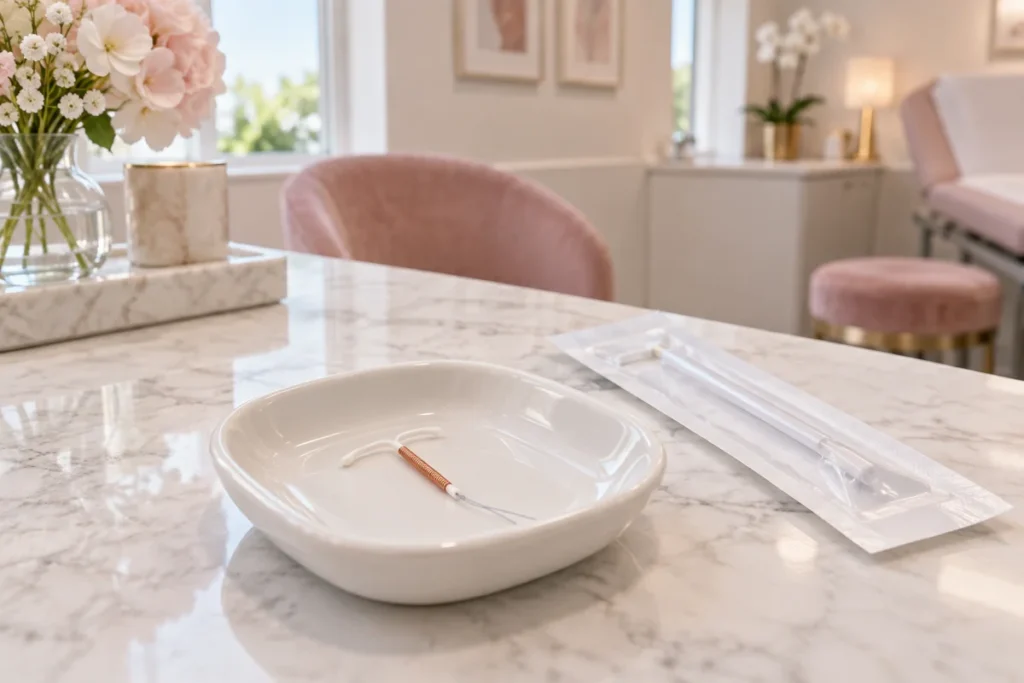
- Copper intrauterine device (IUD): free when fitted through the NHS; private fitting fees apply if arranged privately.
Prices change over time and vary between individual pharmacies, so it is always worth asking about free NHS supply first. The NHS confirms that emergency contraception is free from a range of services, which means paying is often unnecessary.
Where Can You Get Emergency Contraception Free of Charge?
Cost should never be the reason someone delays emergency contraception, because effectiveness reduces the longer you wait. Several NHS routes supply it without charge, and there is no age restriction on being seen.
Free NHS Options
- Sexual health, contraception and reproductive health clinics
- Most GP surgeries (a same-day appointment or telephone consultation may be offered)
- Many community pharmacies commissioned by the local NHS to provide it free
- Some NHS walk-in centres, urgent treatment centres and young people’s services
- Some accident and emergency departments, where other services are closed
Do the Rules Differ Across the UK?
Yes. In Scotland, Wales and Northern Ireland, emergency contraception is generally available free from community pharmacies. In England, free pharmacy supply depends on local NHS commissioning arrangements, so one pharmacy may provide it at no cost while a neighbouring one charges. A quick phone call before travelling can save both time and money.
How Much Is an Emergency Contraceptive Pill from a Pharmacy in London?
Buying over the counter is straightforward: a pharmacist will ask a short set of confidential questions to check the medicine is suitable, then supply it the same day. Prices in London are broadly similar to the rest of the country, though they differ between pharmacies.
How Much Is an Emergency Contraceptive Pill Containing Levonorgestrel?
Levonorgestrel is the older and cheaper of the two hormonal options, sold both as a branded product and as generic versions. Expect a price in the region of £10 to £20. It is licensed for use up to 72 hours after unprotected sex, and it works best when taken as soon as possible. Effectiveness may be reduced for people with a higher body weight or those taking certain enzyme-inducing medicines, in which case a healthcare professional may recommend a different option or an adjusted dose.
How Much Is an Emergency Contraceptive Pill Containing Ulipristal Acetate?
Ulipristal acetate is licensed for use up to 120 hours (five days) after unprotected sex and typically costs around £25 to £35. Because it acts by delaying ovulation, guidance from the Faculty of Sexual and Reproductive Healthcare notes that recent use of a progestogen may reduce its effect, and that hormonal contraception should not be restarted for five days afterwards. A pharmacist or clinician will talk this through with you.
How Much Is an Emergency Contraceptive Pill Bought Online?
Regulated UK online pharmacies supply emergency contraception after an online consultation, sometimes at slightly lower prices, with delivery or click and collect. The obvious limitation is time: delay reduces effectiveness, so online ordering suits buying in advance rather than urgent same-day need. Only use pharmacies registered with the General Pharmaceutical Council, and avoid unregulated overseas websites.
What Influences the Price You Pay?
Several practical factors explain why two people can pay very different amounts for the same medicine.
- Active ingredient: ulipristal acetate consistently costs more than levonorgestrel.
- Branded versus generic: generic levonorgestrel is usually the least expensive option.
- Where you live: local NHS pharmacy schemes vary considerably across England.
- Type of pharmacy: independent pharmacies, supermarkets and large chains all set their own prices.
- Buying in advance: keeping a pill at home avoids paying premium prices in a hurry, and it can be bought before it is needed.
Is the Copper Coil a Better Option Than a Pill?
The copper IUD is the most effective form of emergency contraception and can usually be fitted up to five days after unprotected sex, or up to five days after the earliest estimated ovulation. It is free through the NHS and, unlike a pill, it then provides ongoing contraception for several years. Fitting takes only a few minutes in most cases, although some women experience cramping. NICE and NHS guidance both recognise the copper coil as the most reliable emergency option, and it is worth asking about if you want long-term cover as well.
What Should Happen After Taking Emergency Contraception?
Taking a pill is rarely the end of the story, and a short follow-up plan is sensible.
- Expect your period within a week or so of the usual date. If it is more than seven days late, unusually light or unusual in any way, take a pregnancy test.
- Take a pregnancy test if you have any doubt, ideally at least three weeks after the episode of unprotected sex.
- Consider sexually transmitted infection testing. Emergency contraception offers no protection against STIs, and testing is free at sexual health clinics.
- Arrange ongoing contraception. Emergency contraception is a backup, not a routine method.
- Seek review for severe pain or heavy, abnormal bleeding, or if you vomit within a few hours of taking the tablet, as a repeat dose may be needed.
It is also worth knowing that emergency contraceptive pills work mainly by delaying ovulation. They do not end an established pregnancy and are not the same as the abortion pill, a distinction the Royal College of Obstetricians and Gynaecologists and NHS resources both make clear.
When Might a Specialist Consultation Be Helpful?
Most people never need more than a pharmacist or GP for emergency contraception. Specialist gynaecological input may be helpful where there are recurrent contraceptive difficulties, very heavy or irregular bleeding, previous problems with coil fitting, fibroids, endometriosis or persistent pelvic pain. A consultation can clarify which methods are realistic for your body and your medical history, and a range of investigations and gynaecological treatments are available where an underlying condition is suspected. Conditions such as uterine fibroids can influence both bleeding patterns and contraceptive choice, so assessment is sometimes worthwhile.
Frequently Asked Questions
How much is an emergency contraceptive pill if I have to pay for it?
Privately, generic levonorgestrel usually costs around £10 to £20, and ulipristal acetate around £25 to £35, though prices differ between pharmacies. Many people pay nothing, because sexual health clinics, GP surgeries and numerous community pharmacies supply emergency contraception free through the NHS.
Is emergency contraception free for everyone in England?
NHS services such as sexual health clinics and GP surgeries provide it free regardless of age. Free pharmacy supply in England depends on local NHS arrangements, so it varies by borough. In Scotland, Wales and Northern Ireland, pharmacies generally provide it free of charge.
Which emergency contraceptive pill is more effective?
Both work best the sooner they are taken. Ulipristal acetate can be used up to five days afterwards and may be more effective closer to ovulation, while levonorgestrel is licensed up to three days. The copper coil is the most effective emergency option overall.
Can I buy an emergency contraceptive pill in advance?
Yes. Pharmacies can supply emergency contraception before it is needed, which many women find reassuring and often cheaper than buying urgently. Check the expiry date, store it as directed, and remember it remains a backup rather than a regular contraceptive method.
Does body weight affect how well the pill works?
It may. Current UK guidance suggests levonorgestrel can be less effective at higher body weights, and a different option, an adjusted dose or a copper coil may be recommended. A pharmacist or clinician will discuss the most suitable choice for your circumstances.
Will emergency contraception affect my future fertility?
There is no evidence that emergency contraceptive pills harm future fertility. Your next period may come slightly earlier or later than expected, and fertility returns to normal straight away, which is why ongoing contraception should be started or restarted promptly.
To summarise: how much an emergency contraceptive pill costs in the UK depends entirely on where you obtain it, ranging from free through NHS services to roughly £10 to £35 over the counter, with cost never a reason to delay. If you would like advice on reliable ongoing contraception, coil or implant fitting, or assessment of heavy, irregular or painful periods, you can arrange a consultation with Mr Saurabh Phadnis, Consultant Gynaecologist and Gynaecological Oncology Surgeon in London, for a calm, individualised discussion of your options.